Tibialis Posterior Tendon Dysfunction (PTTD) and Adult Acquired Flatfoot Deformity: A Comprehensive Guide to Effective Non-Surgical Treatment Options. By Elisha King, Training & Education Podiatrist (January 15, 2025).
Tibialis Posterior Tendon Dysfunction (PTTD) is a common yet often misunderstood condition that plays a significant role in Adult Acquired Flatfoot Deformity (AAFFD). While PTTD is only one component of AAFFD, it is frequently accompanied by dysfunction of the spring and deltoid ligaments, making it a complex condition that often fails to respond to traditional foot orthotic therapy and rehabilitation. For the purpose of this article, we will focus on the Posterior Tibial Tendon and explore non-surgical treatment options for managing this condition.
Anatomy of the Posterior Tibial Tendon
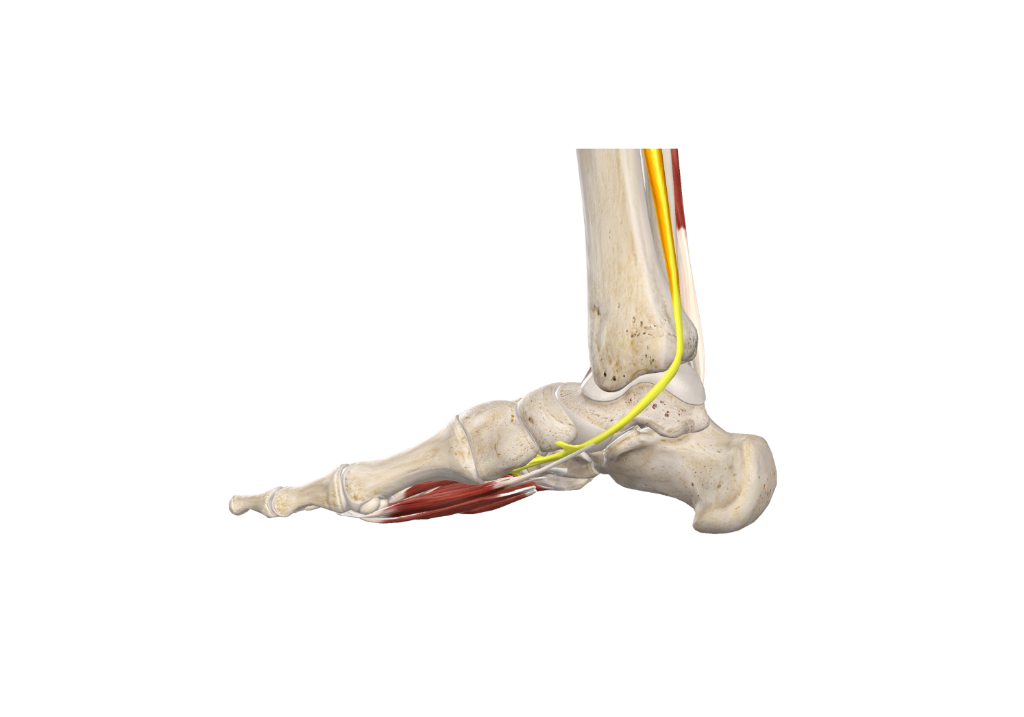
The Posterior Tibial Tendon is a critical structure in the foot and ankle. It originates from the Tibialis Posterior muscle, travels through the Tarsal Tunnel, and inserts at multiple points on the foot, most notably the navicular tuberosity. This tendon acts as a dynamic stabiliser of the medial longitudinal arch, facilitating inversion and plantarflexion of the hindfoot during gait. When the Posterior Tibial Tendon becomes dysfunctional, it can lead to a cascade of bio-mechanical issues, resulting in the progressive collapse of the arch and the development of AAFFD.
Stages of PTTD
PTTD is classified into four stages, each with distinct characteristics and treatment implications:
Stage One — Early Intervention
Symptoms: Inflamed but intact tendon; mild to moderate pain; no deformity.
Treatment Focus: Reduce inflammation; strengthen supporting structures; prevent progression.
The goal in Stage 1 is to reduce inflammation, strengthen the Tibialis Posterior tendon, and prevent progression.
- Physical Therapy: Focus on recruiting the Tibialis Posterior and strengthening secondary muscles such as the Gastrocnemius, Soleus, Peroneals, and foot intrinsics. Incorporate exercises to improve flexibility and range of motion.
- Footwear Changes: Recommend wide, stable shoes with increased heel pitch to improve ground reaction forces (GRF) under the medial aspect of the foot.
- Custom Foot Orthoses: Design orthotics with rearfoot control, rearfoot varus wedging, and a deep heel cup (16mm+) with a lateral clip. Consider a heel skive for patients with a medially deviated subtalar joint (STJ) axis.
Stage Two — Progressive Support
Symptoms: Torn or dysfunctional tendon; flexible deformity; abnormal single-leg heel raise.
Treatment Focus: Provide additional support; correct deformity; improve function.
In Stage 2, the focus shifts to providing additional support to correct the flexible deformity and improve function.
- Shoe Modifications: Add a medial buttress to widen the base of support and prevent the foot from collapsing over the orthotic device.
- University of California-Berkeley Lab (UCBL) Orthosis: A custom device with a deep heel cup and medial/lateral flanges to provide enhanced control and support.
- Low-Profile Articulated Ankle Foot Orthoses (AFOs): Consider devices like the iO Brace, which require only a scan of the foot and ankle and offer a cost-effective alternative to fully custom AFOs.
- Fully Custom Short Articulated AFOs: For patients with access to funding, a fully custom AFO can provide superior support and control. This requires a scan of the foot, ankle, and lower leg.
Stage Three — Advanced Management
Symptoms: Elongated and fully dysfunctional tendon; fixed deformity; degenerative changes in the subtalar joint.
Treatment Focus: Manage deformity; reduce pain with advanced bracing and footwear modifications.
Stage Four
Symptoms: Stage 3 symptoms plus degeneration of the lateral tibiotalar joint (ankle).
Treatment Focus: Address severe deformity; surgical intervention often required.
In Stages 3 and 4, the focus is on managing fixed deformities and reducing pain through advanced bracing and footwear modifications.
- Shoe Modifications: Re-last shoes to accommodate the foot deformity and improve comfort.
- Fully Custom Ankle Foot Orthoses: Solid or articulated AFOs can be designed based on the patient's specific needs. These require a scan of the foot, ankle, and lower leg.
- Custom Footwear: For patients who cannot tolerate off-the-shelf medical-grade footwear, custom footwear is an excellent option. This can incorporate Supramalleolar Orthoses (SMOs) or AFOs directly into the shoe design.
Why Non-Surgical Treatment Matters
Non-surgical treatment options for PTTD are essential for slowing disease progression, reducing pain, and improving function. Early intervention, particularly in Stages 1 and 2, can often prevent the need for surgery. Even in advanced stages, non-surgical options can provide significant relief and improve quality of life for patients who are not candidates for surgery or prefer to avoid it.
Conclusion
Tibialis Posterior Tendon Dysfunction is a complex condition that requires a tailored approach to treatment. By understanding the stages of PTTD and implementing appropriate non-surgical interventions, healthcare providers can help patients manage their symptoms and maintain mobility. From physical therapy and custom orthotics to advanced bracing and footwear modifications, there are numerous tools available to support patients on their journey to recovery.